Social Media Content Marketing: Complete Strategy Guide
I am a digital marketer. What I am going to tell you in this informative content is what kind of strategy social media content should have: Social Media Content Marketing strategy
Honestly? Most people don’t even make a strategy. They just keep posting—sometimes a reel, sometimes a quote, sometimes a random trend. Then they say, “growth is not happening.”
How will growth happen, bro, when there is no proper strategy?
Social media content strategy feels boring, but it is the real game changer. It is the thing that takes you from “random posting” to “advanced growth.”
What is Social Media Content Marketing?
In simple words, social media content marketing means creating and sharing content on social media that grabs people’s attention, gives them value, and slowly connects them to your brand, service, or idea.
It is not just “posting.” It is a planned process where you think before making content, not just for likes, but for long-term impact.
“First give value, then build trust, and then get results.”
It means you don’t directly try to sell. First, you give people something useful, interesting, or relatable.
Example:
- Sharing tips
- Making short videos
- Telling stories
- Solving problems
If the content feels useful, people follow you. And that is where marketing starts.
Why Social Media Content Marketing is Important for Businesses
Simply put: running a business today and ignoring social media is not possible at the same time. People now check Google and Instagram before going to a shop. And that is where the game is decided.
If you are not visible, you do not exist—at least in the online world.
Earlier, business depended on location. Now it depends on attention.
People scroll all day:
- Instagram reels
- YouTube shorts
- Facebook posts
- LinkedIn updates
If you are not there, your competitor already is.
Social media content marketing gives you entry into that attention market—without heavy ads every time.
It is important because it is not just marketing, it is a relationship-building system.
It helps you:
- Get attention
- Build trust
- Create long-term growth
Types of Social Media Content That Drive Engagement
Content marketing is not just one thing. It is a mix of different formats and styles that work for different goals. If you depend on only one type, your growth becomes limited.
Let’s understand it in a simple way.
Social Media Content Marketing strategy
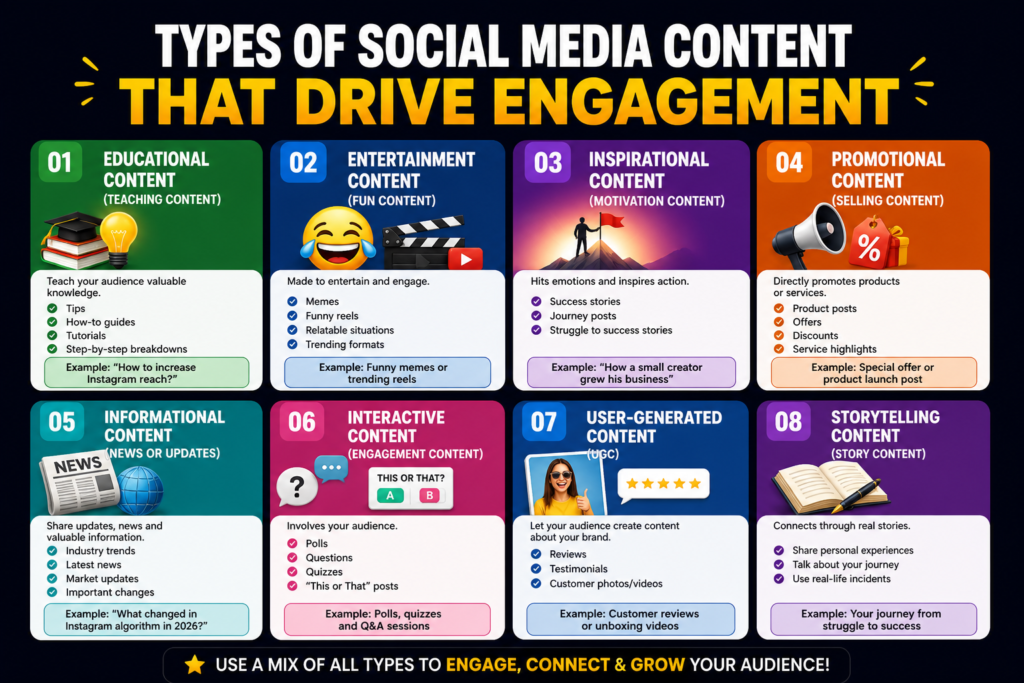
Educational Content (Teaching Content)
This is the most powerful type.
In this, you teach your audience:
- Tips
- How-to guides
- Tutorials
- Step-by-step breakdowns
Example:
“How to increase Instagram reach?”
This type of content builds trust. People start seeing you as an expert.
Entertainment Content (Fun Content)
People don’t come on social media to get bored—they come to relax.
So entertainment content is very important:
- Memes
- Funny reels
- Relatable situations
- Trending formats
This content has the highest chance of going viral because people share it without thinking.
Inspirational Content (Motivation Content)
This content hits emotions.
It includes:
- Success stories
- Journey posts
- Struggle to success stories
Example:
“How a small creator grew his business”
People connect emotionally with this and start following the brand or creator.
Promotional Content (Selling Content)
This type of content is directly for selling:
- Product posts
- Offers
- Discounts
- Service highlights
But the problem is—if only this is posted, the audience gets tired.
It should be used in a limited and smart way.
Informational Content (News or Updates)
In this, you share updates or knowledge:
- Industry trends
- Latest news
- Market updates
- Important changes
Example:
“What changed in Instagram algorithm in 2026”
This keeps you relevant and updated.
Interactive Content (Engagement Content)
This involves the audience:
- Polls
- Questions
- Quizzes
- “This or That” posts
The goal is not just views, but engagement.
User-Generated Content (UGC)
In this, your audience creates content:
- Reviews
- Testimonials
- Customer photos/videos
This is a very strong trust signal because real users are speaking about you.
Storytelling Content (Story Content)
People forget facts, but they remember stories.
In this, you:
- Share personal experiences
- Talk about your journey
- Use real-life incidents
Storytelling content connects emotionally with the audience.
Best Social Media Content Marketing Tips for Beginners
Starting is always a bit messy. Ideas are there, excitement is there, but direction is missing. Then people say, “content is not working.”
The truth is—content is not the problem, the approach is weak.
If you are a beginner, these tips will save you from confusion.
First mistake: making content without a goal
Think:
- Do you want followers?
- Do you want leads?
- Do you want brand awareness?
If the goal is not clear, the content will also be random.
Simple rule:
Without a destination, travel is just wandering, not a journey.
Understand your audience, don’t guess
“Content for everyone” means “content for no one.”
Do some research:
- What do they like to watch?
- What problems do they face?
- What language or tone do they prefer?
The clearer the audience, the easier it becomes to create content.
Do content planning
Thinking “what should I post today?” every day wastes energy.
Better approach:
- Plan 3–5 ideas weekly
- Decide topics in advance
- Keep basic structure ready
Then only execution is left, no overthinking.
Make a strong hook, or people will scroll away
First 2–3 seconds decide everything.
Weak hook:
“Today we will talk about social media tips…”
Strong hook:
“Are you creating content… or just wasting time?”
Clear difference. Hook = attention grabber.
Final Thoughts on Social Media Content Marketing
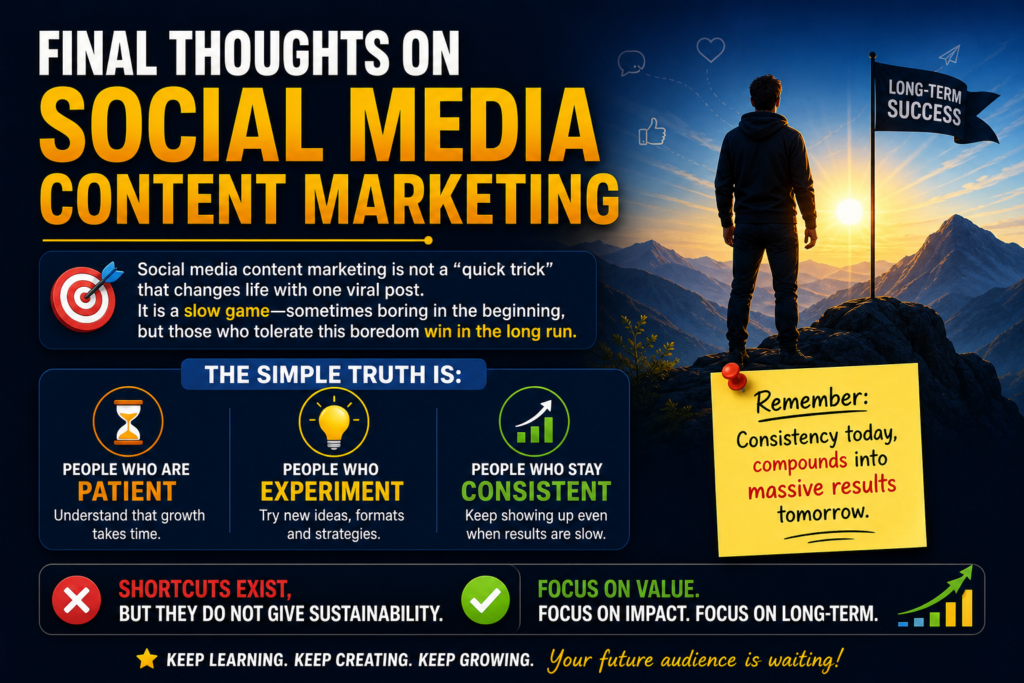
Social media content marketing is not a “quick trick” that changes life with one viral post. It is a slow game—sometimes boring in the beginning, but those who tolerate this boredom win in the long run.
The simple truth is: Social Media Content Marketing strategy
- people who are patient
- people who experiment
- people who stay consistent
are the ones who win the long-term game.
Shortcuts exist, but they do not give sustainability.